When Studies
Become
Amazon #1 New Release in Psychology Research
Psychology is everywhere. Not all of it is true.
When Studies Become Stories examines 89 of the most widely shared ideas in popular psychology and gives each one a straight verdict.
Read description →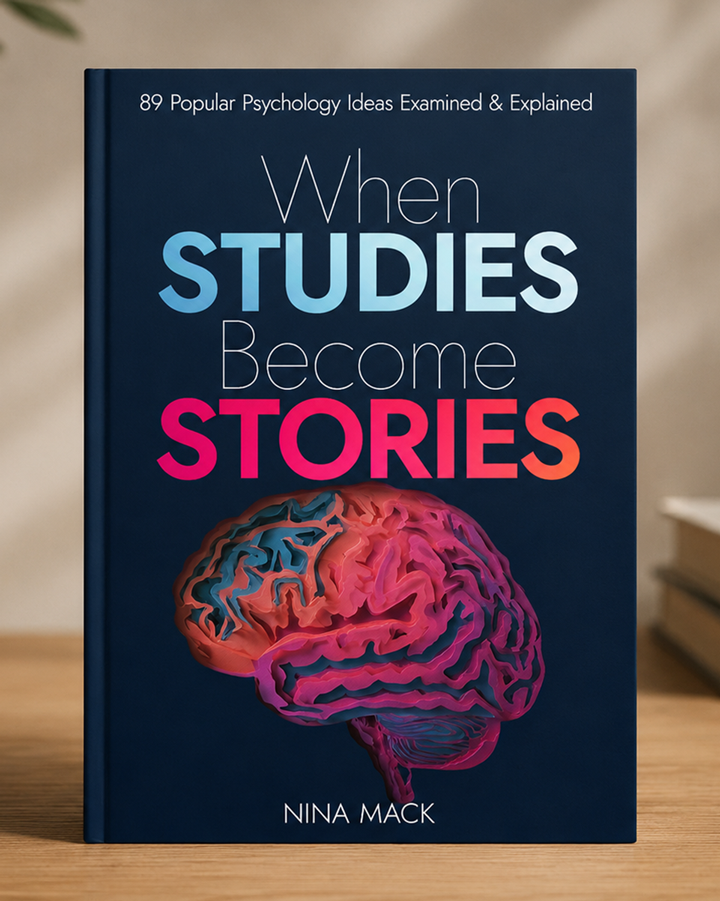 Look inside
Psychology is everywhere. Not all of it is true.
"If you enjoy psychology but also care about evidence and scientific accuracy, this is a fantastic resource."
"This a must read for anyone who gets pulled into social media content about current psychology!"
On their way from the lab to your news feed, psychology ideas evolve.
Every day, you encounter claims about how your mind works, backed by the phrase "studies show."
It takes 21 days to form a habit. You have a love language. Power poses can change your hormones. Your attachment style shapes your relationships. Dopamine is your brain's pleasure chemical.
Some of these ideas are supported by evidence. Some are oversimplified. Some were never backed by research in the first place. The problem is, it all sounds convincing.
When Studies Become Stories examines 89 of the most widely shared ideas in popular psychology and gives each one a straight verdict:
Covering topics including relationships, memory, learning, personality, motivation, decision-making, trauma, emotions, and the brain, it explains what the studies actually show, where the popular version goes wrong, and what a more accurate version looks like.
Written in easy-to-digest, accessible language, this is psychology in plain terms. When you finish reading this book, you will be able to:
- Recognise which popular psychology ideas are genuinely supported by evidence and which are not
- Spot where research has been exaggerated, simplified, or misrepresented
- Think critically about self-help advice, viral psychology content, and behaviour
- Explain common psychological concepts more accurately and with greater nuance
- Make better sense of the gap between scientific research and pop psychology
If you have ever heard a psychology "fact" and wondered whether it was actually true, this book is for you.
Includes bonus content covering popular claims about sex, pornography, fetish, and kink - discover what the studies say on these topics today.
What readers are saying
"The clarity of the book's prose shines throughout. Social science is often cluttered with technical terminology, competing definitions, and methodological caveats, yet Mack has an impressive ability to translate these complex debates into accessible language while preserving nuance."
"When Studies Become Stories" by Nina Mack is very well written. It is based on the author's decades of experience in psychology. The book presents, contextualizes, and outright debunks nearly 90 popular myths and misconceptions about psychology. [...] each page is packed with interesting true and accurate facts about psychological myths and the actual facts. Best of all, you can read the book in five minute blocks, one "myth" explained and even debunked at a time. This makes it perfect for waiting rooms or casual reading spaces like the living room.
"I have a keen interest in psychology, but I'm a layperson, so I appreciated how accessible this book was. I enjoyed learning about these psychology ideas; some were familiar, but many were completely new to me. I think this is the type of book I would return to. There is also a glossary of terms at the back, which I found very useful."
"This a must read for anyone who gets pulled into social media content about current psychology! It was so eye opening!! Highly recommend."
"This is one of those books that quietly becomes a permanent resource on your shelf. What impressed me most was the structure. The author explains the framework at the beginning and then sticks to it consistently throughout the entire book. Each chapter examines a popular psychology concept, model, or belief and places it into a clear category based on the available evidence [...] This simple approach makes the book incredibly accessible. I read it in small chunks between work, cooking, playground visits, and bedtime routines, and it was remarkably easy to pick up again without feeling lost."
"For anyone working in coaching, education, psychology, or simply interested in human behavior, the categorization alone is immensely valuable [...] What I appreciated most was the nuance. The author doesn't simply dismiss ideas or declare them "right" or "wrong". Instead, each concept is carefully examined and placed into context, allowing readers to understand both its strengths and limitations. If you enjoy psychology but also care about evidence and scientific accuracy, this is a fantastic resource. Less sensationalism, more critical thinking and that is something I always appreciate. A highly useful and thoughtfully structured read that I know I will return to again."
"I really like the concept of the book and I would very much like to read a similar analysis about other fields, from medicine to nutrition to anything else really."
89 ideas, each one given a clear verdict.
From the 10,000-hour rule to growth mindset, from the halo effect to left-brain vs right-brain - each chapter takes one widely shared idea, shows what the research actually says, and gives it a clear verdict you can use.
- 89 popular ideas, each in a short, readable chapter
- Plain-English summaries of the actual studies
- A clear verdict at the end of every chapter
- Sources you can check yourself

About Nina Mack
Nina Mack writes about psychology, evidence, and the stories we tell about our own minds. When Studies Become Stories is her field guide to telling the difference between a finding and a folktale.
Be the person that knows what the studies actually showed.
Paperback and Kindle. Ships from Amazon worldwide.